
Riding Shotgun
Co-op Alt Ctrl Arcade Racing Shooter
3rd Place Peoples Choice Award at Level Up 2026
Project Information
This game was created over the course of 8 months for our Capstone Thesis project at Sheridan College. The team size was 5 people, and the game was created in Unity. My roles on the project were Level Designer and Producer.
Our goal was to create a playable, polished vertical slice over the course of 8 months. The main focus was to ensure the game had an attention grabbing style, fast-paced intense co-op, and is intuitive and easy to pick up, with our sights set on showcasing at the Level Up 2026 convention in Toronto.
Game Description
Riding Shotgun is an arcade car combat game. Players commandeer the Crimson Crucible -- driving and shooting across the Mojave while mowing down hordes of relentless demons. Keep your wits about you to reach your destination; the City of Sin - Las Vegas.
Team Members
Matt - Level Designer & Producer
Gleb - Gameplay Programmer
Charlie - 3D Artist, UI Designer, & Sound Designer
Sydney - 3D Artist, UX Designer, VFX
Shaun - Gameplay Programmer, Systems Designer
Vai - Narrative Designer
My Roles
Level Designer
Producer
Cabinet Maker
Process Work
Level Design Document
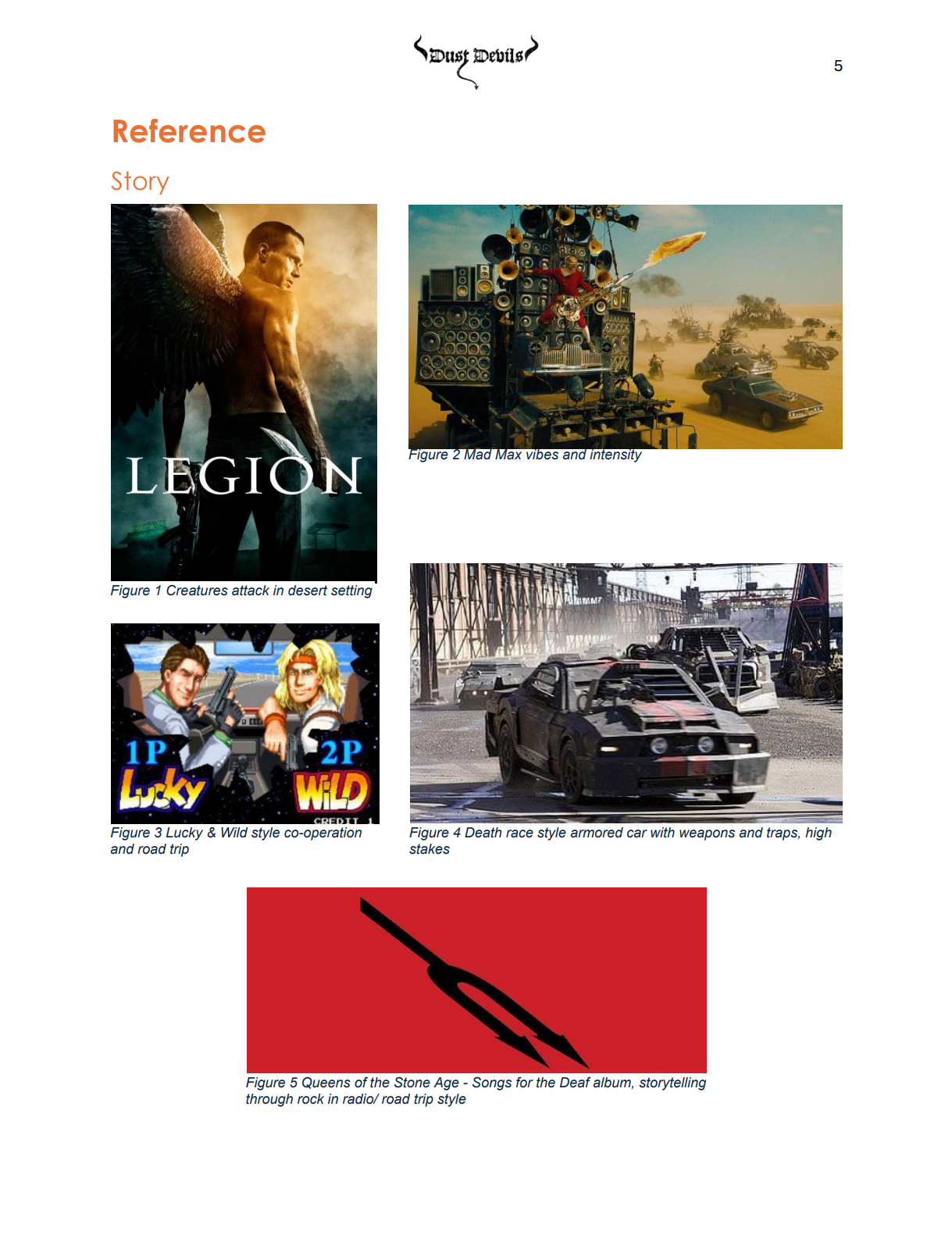
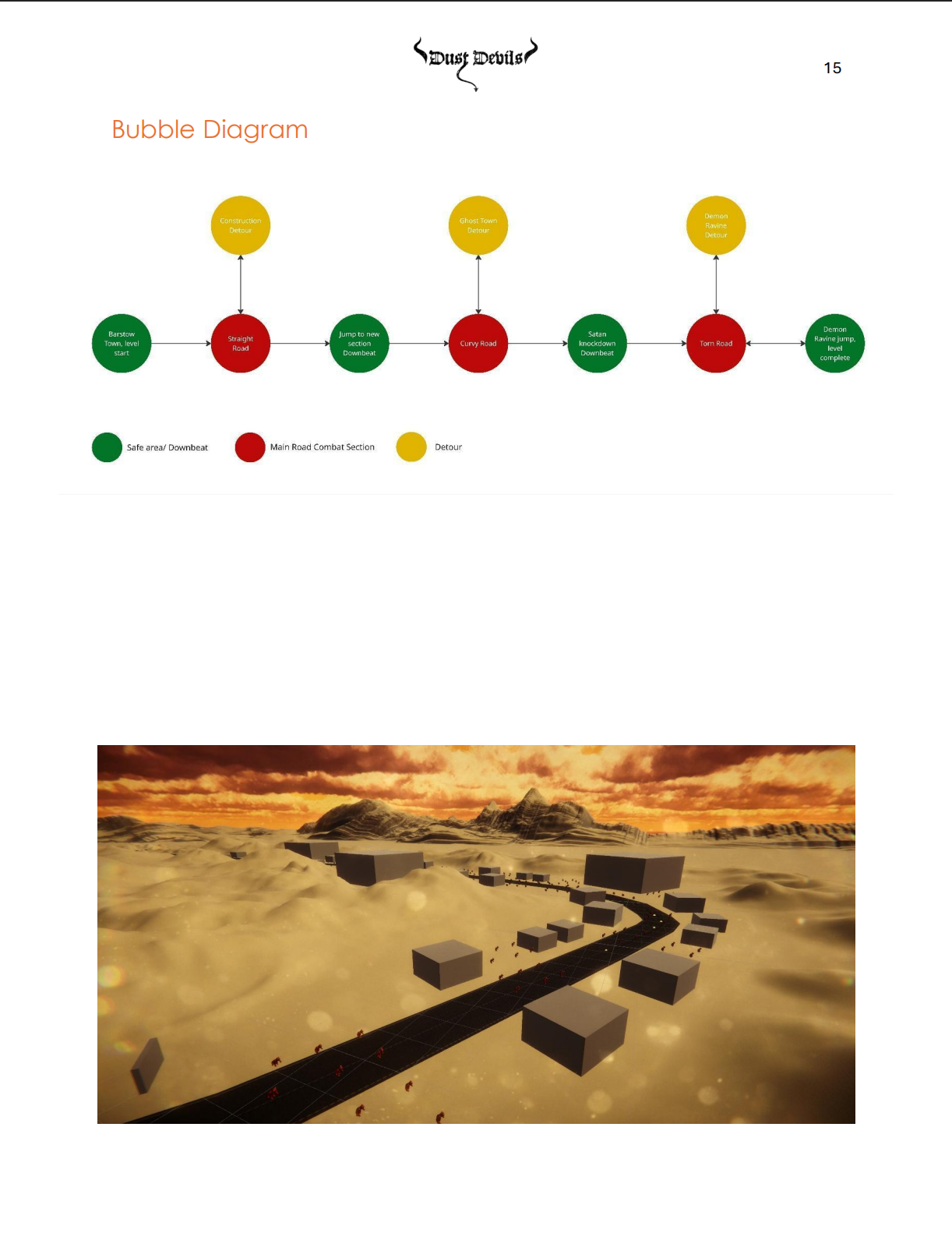
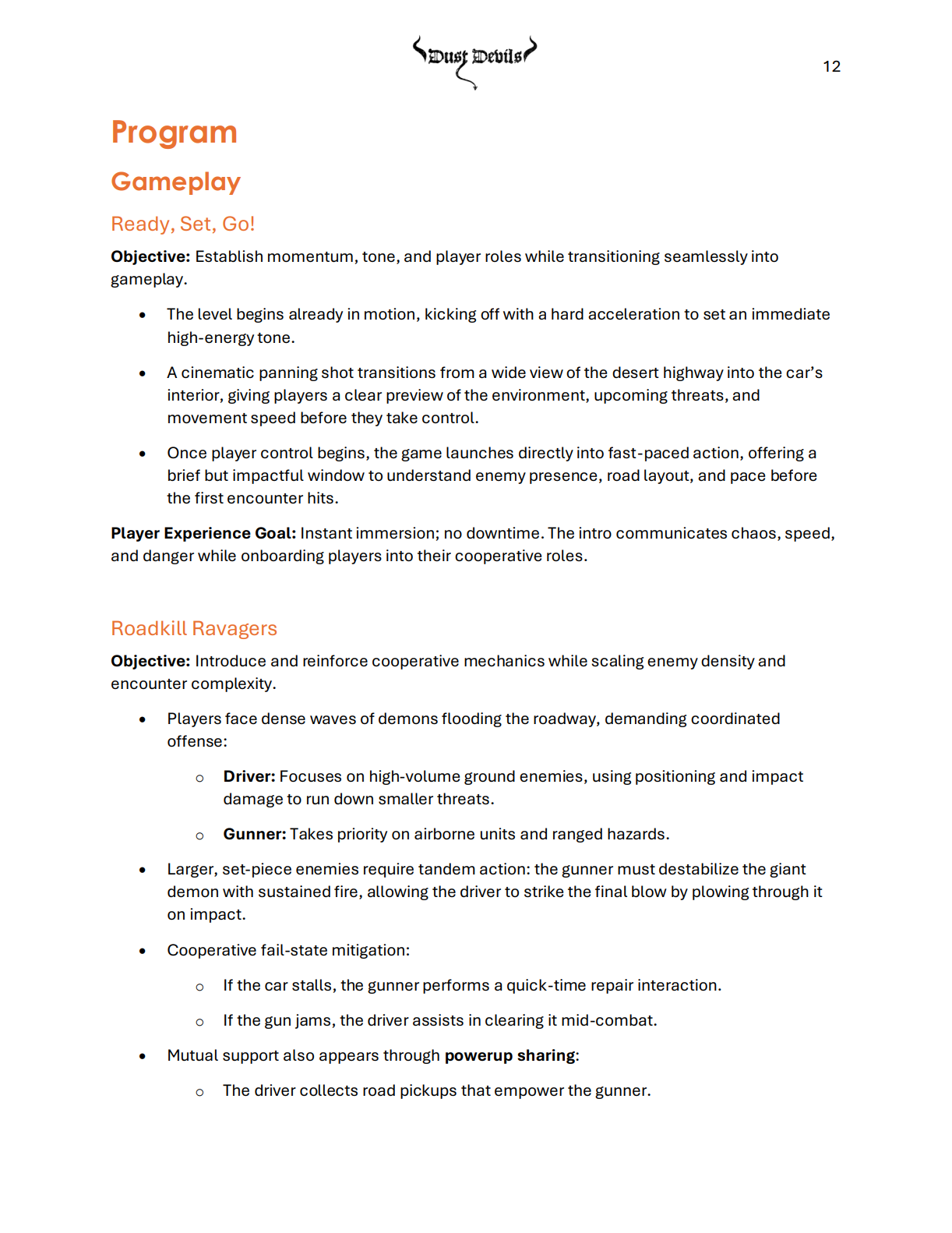
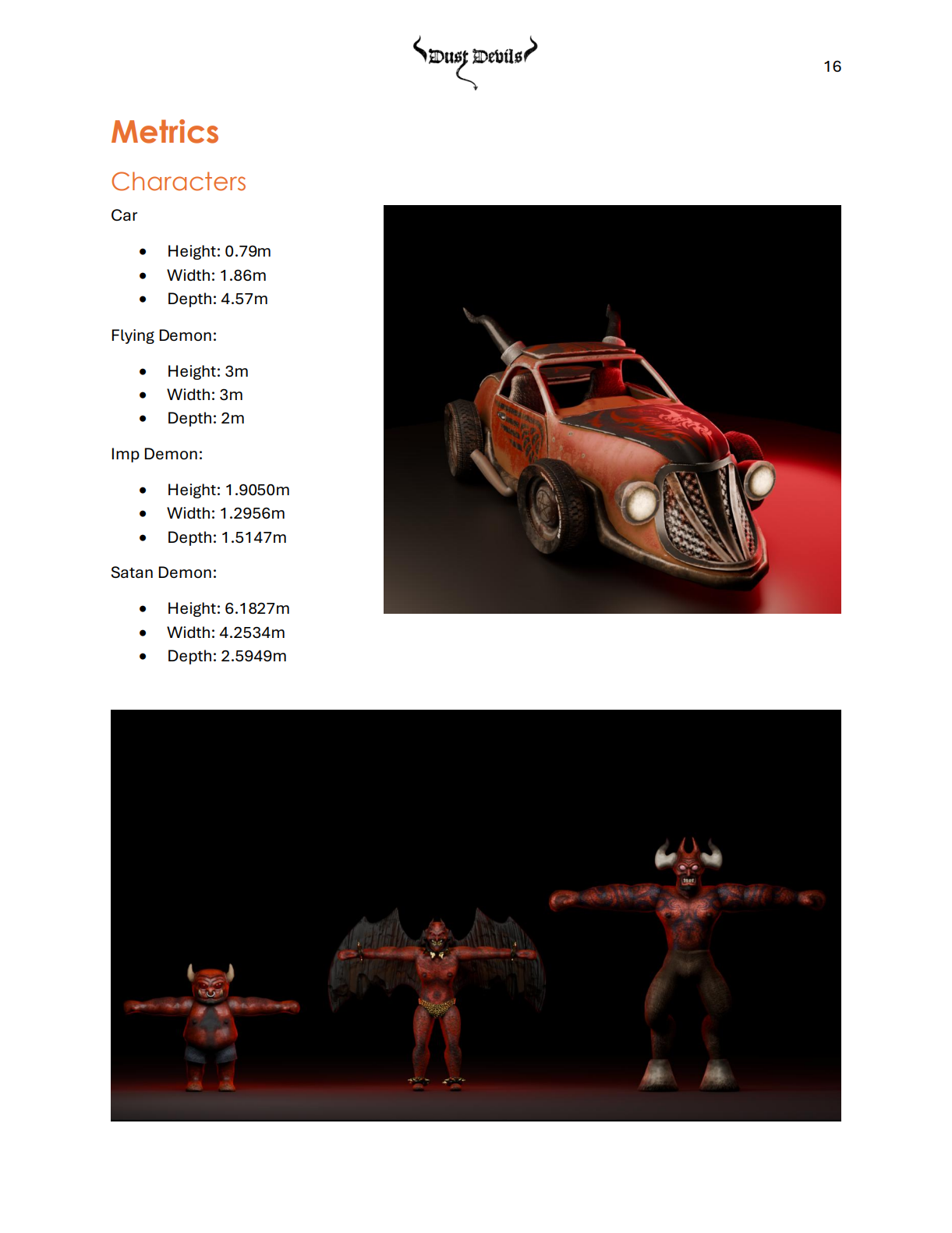
Process Work Media
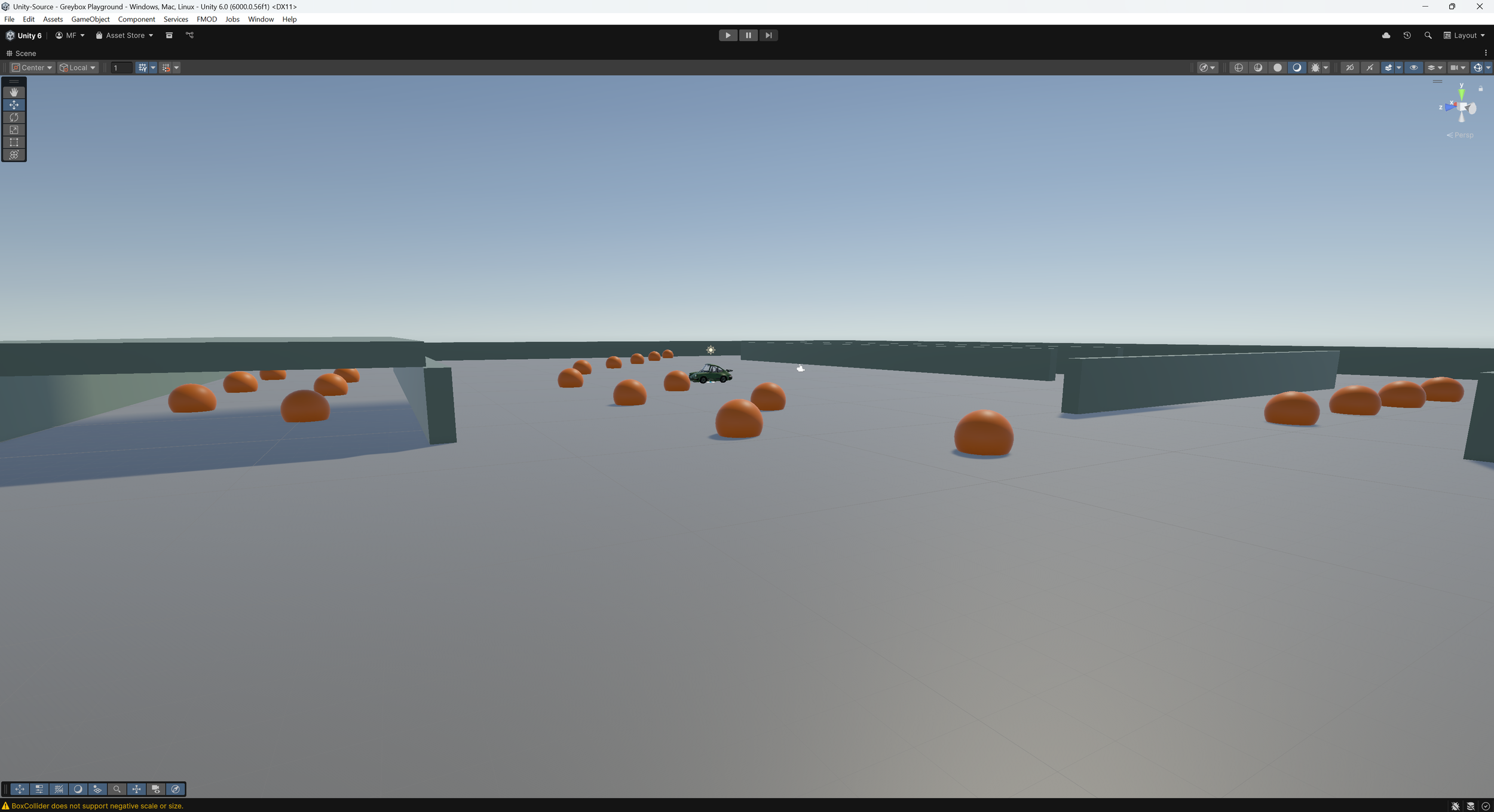
Started with a playground for the car to test in
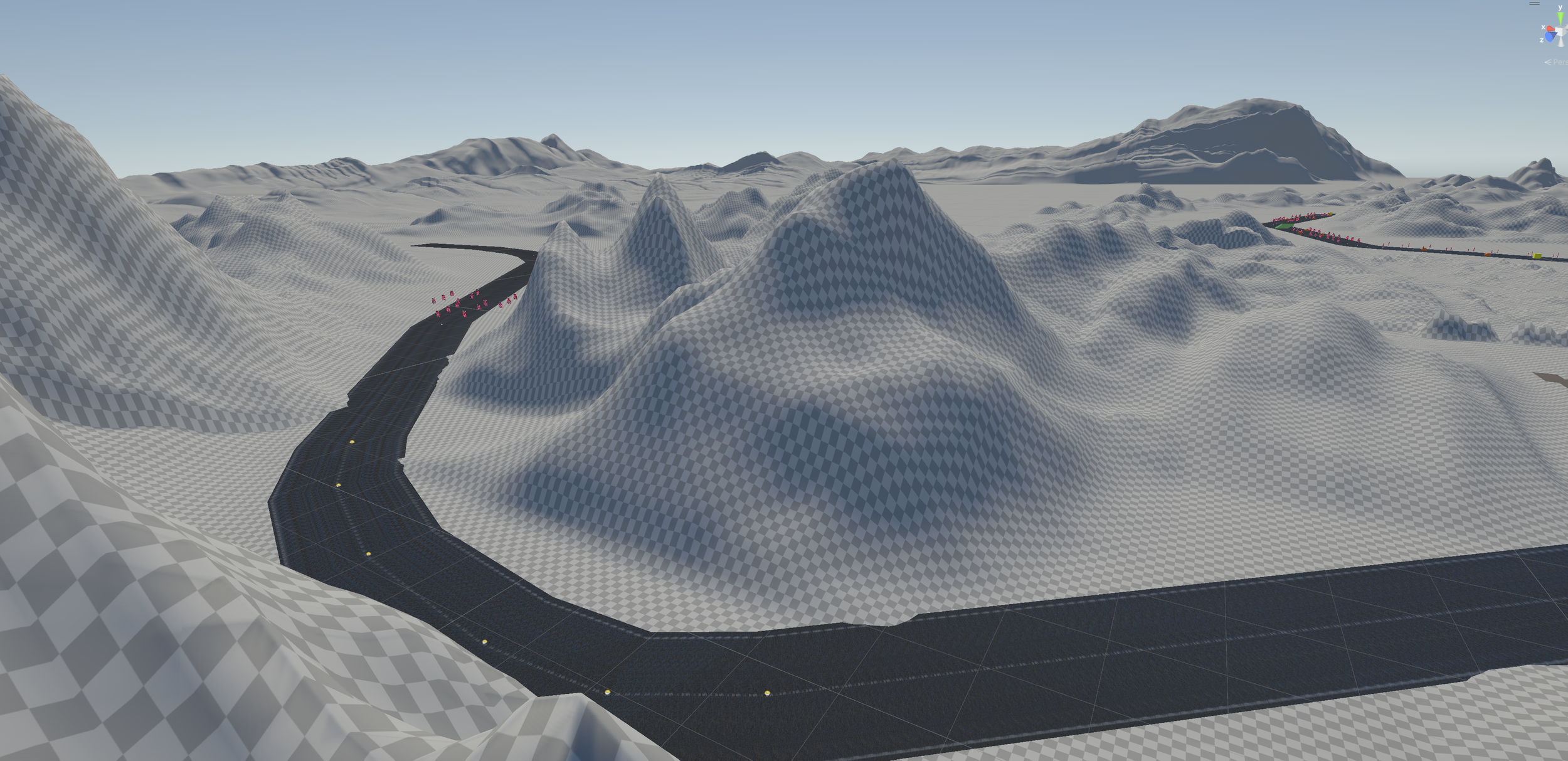
Implemented Road Spline System and terrain sculpting
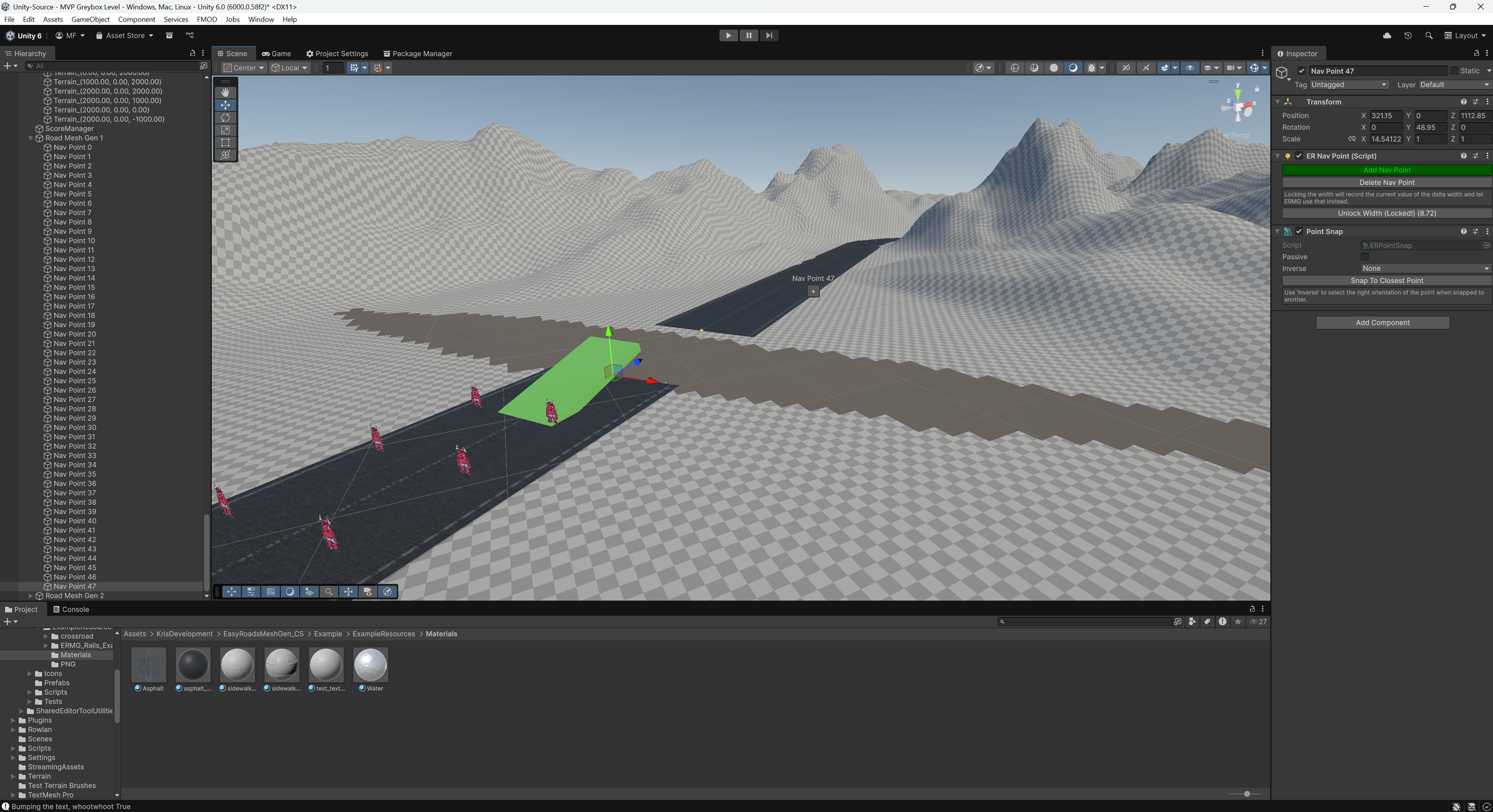
Working on jump metrics
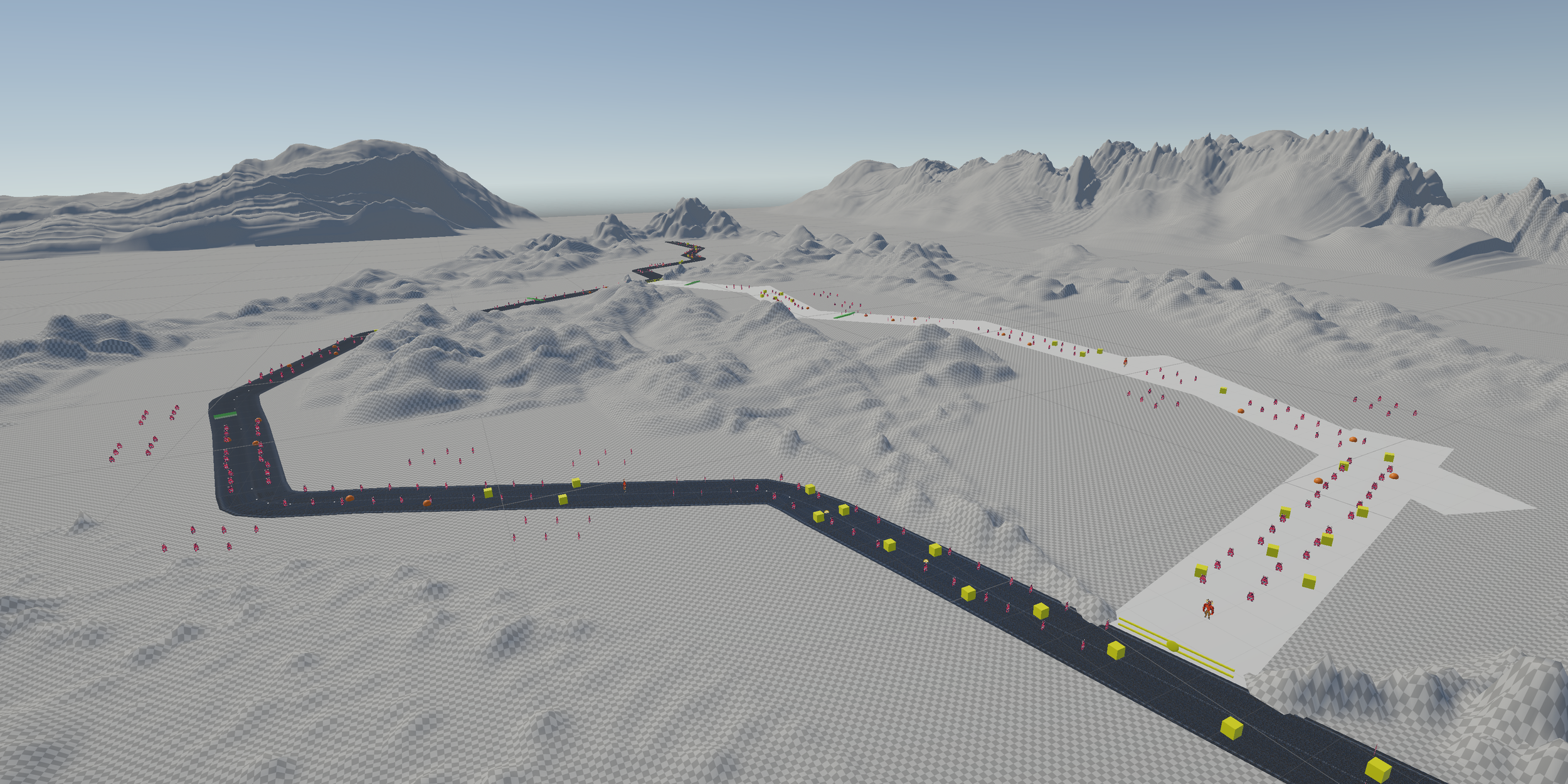
Act 1 first pass greybox
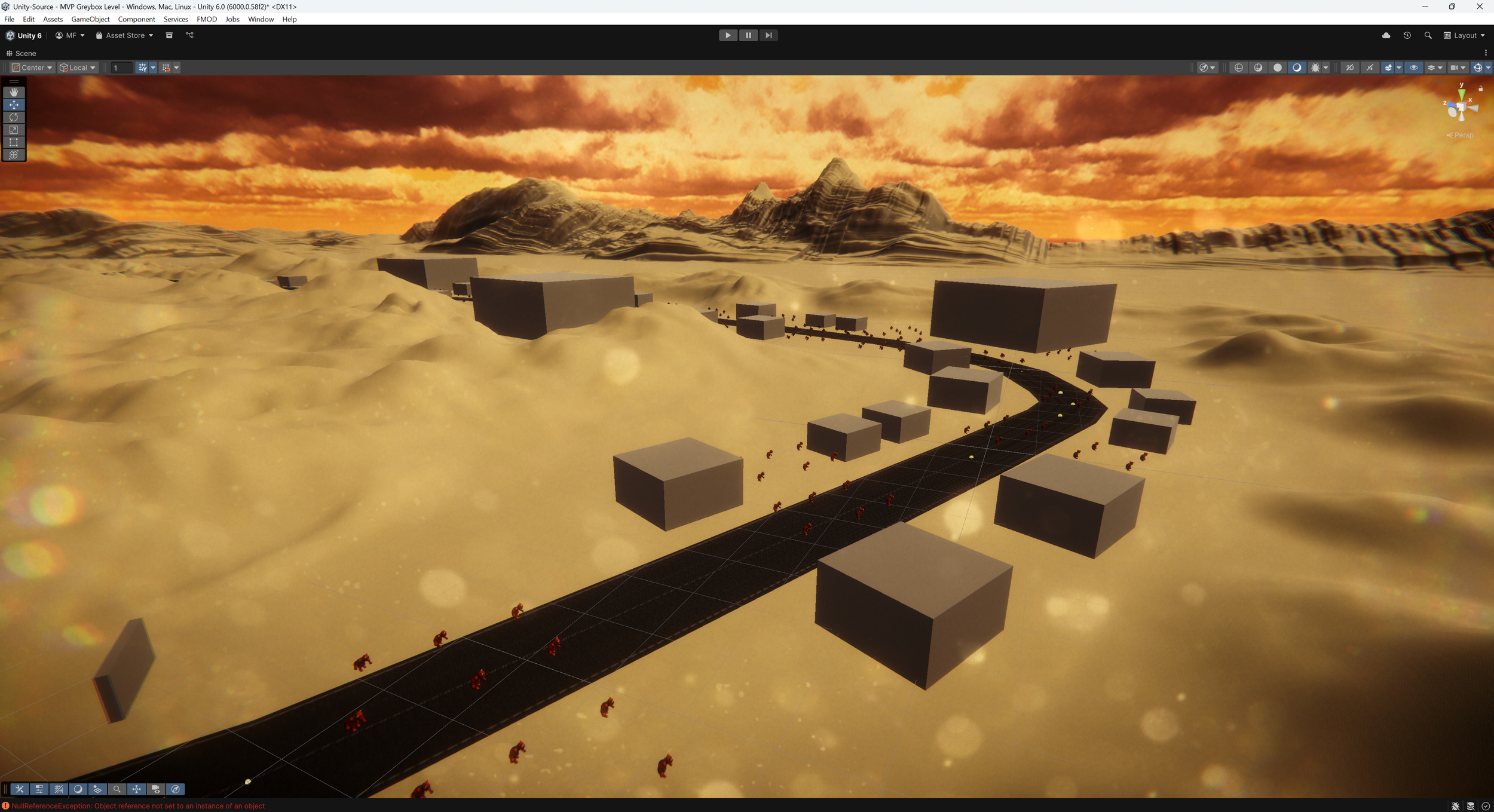
Greybox Ghost Town detour
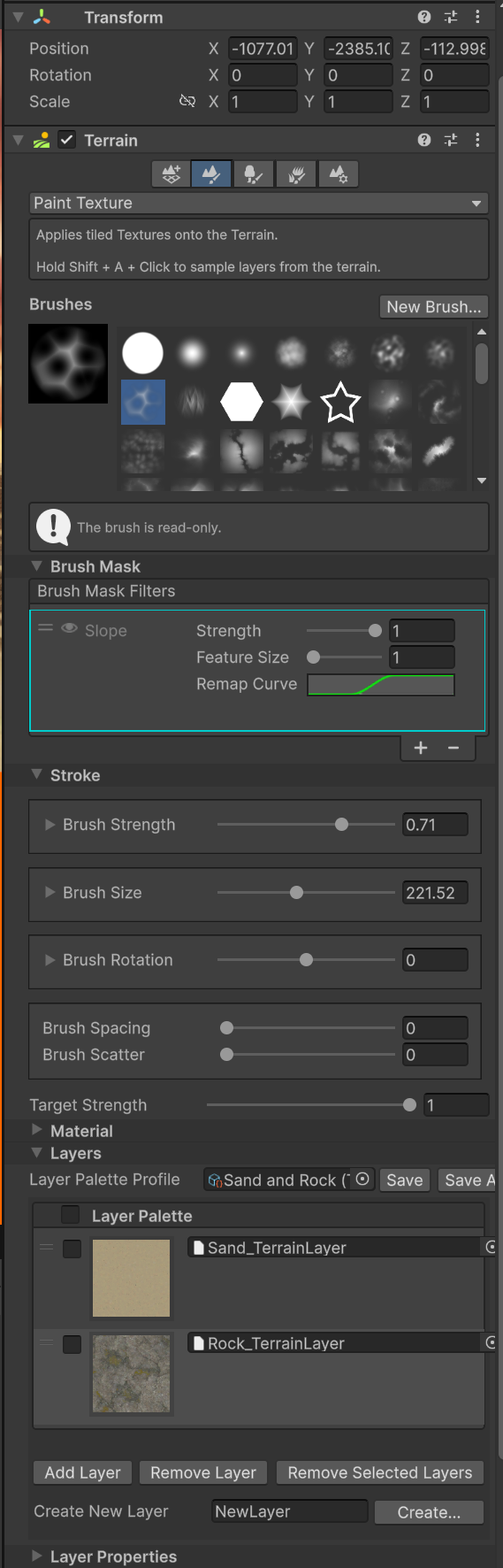
Learnt how to use the slope material application tool
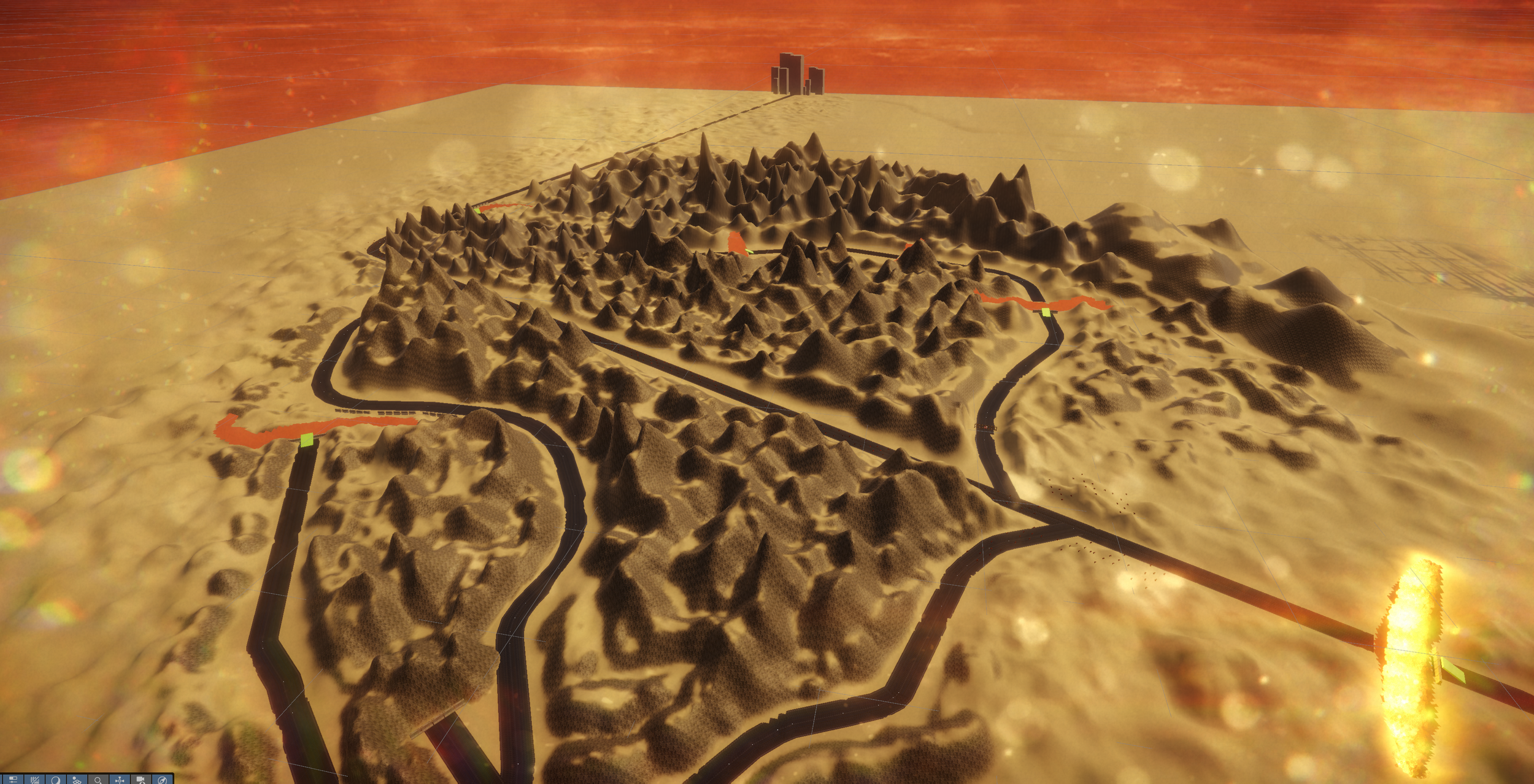
Act 3 Terrain Completed with slope tool
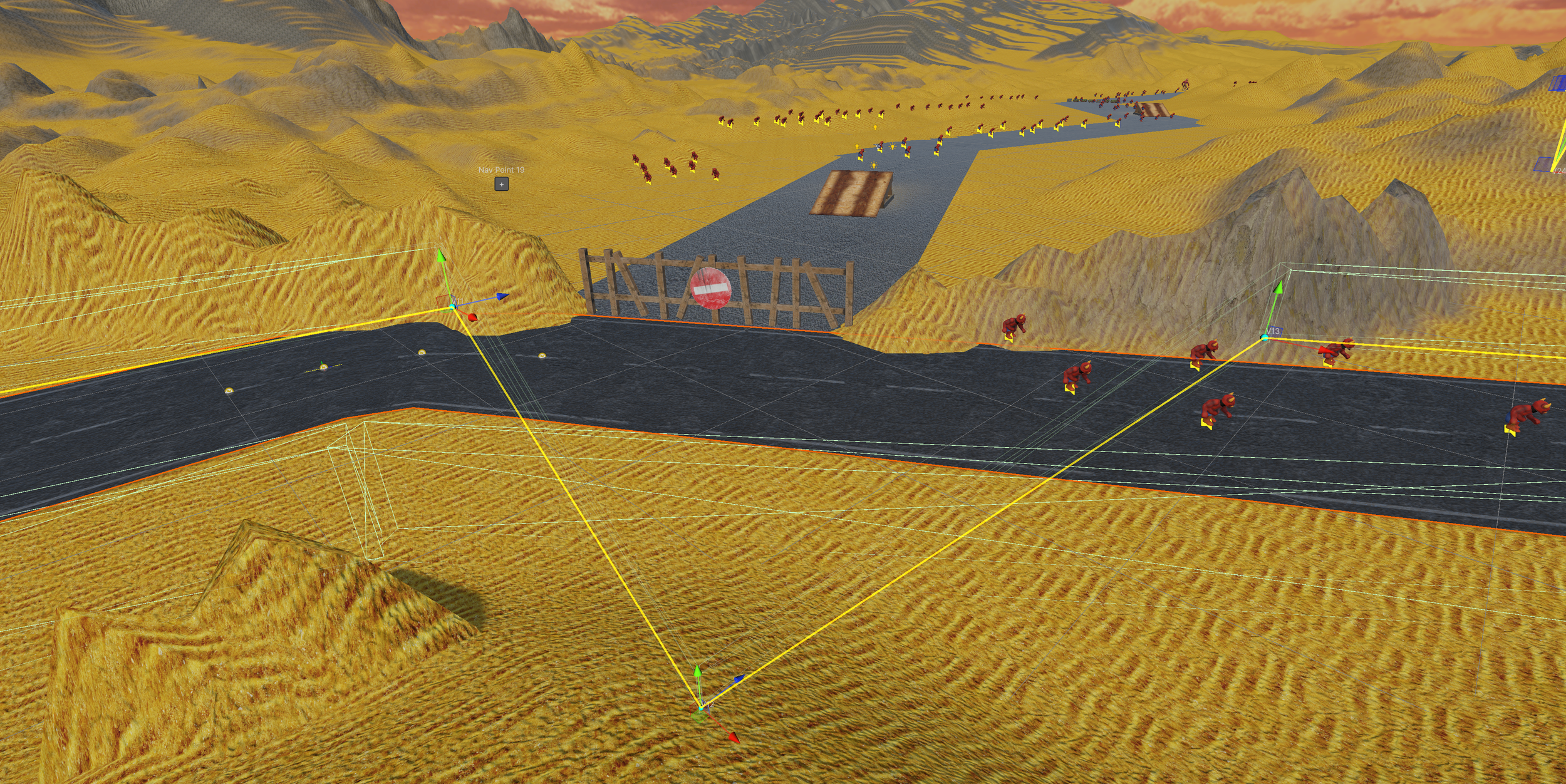
Creative solution to needing breaks in invisible walls
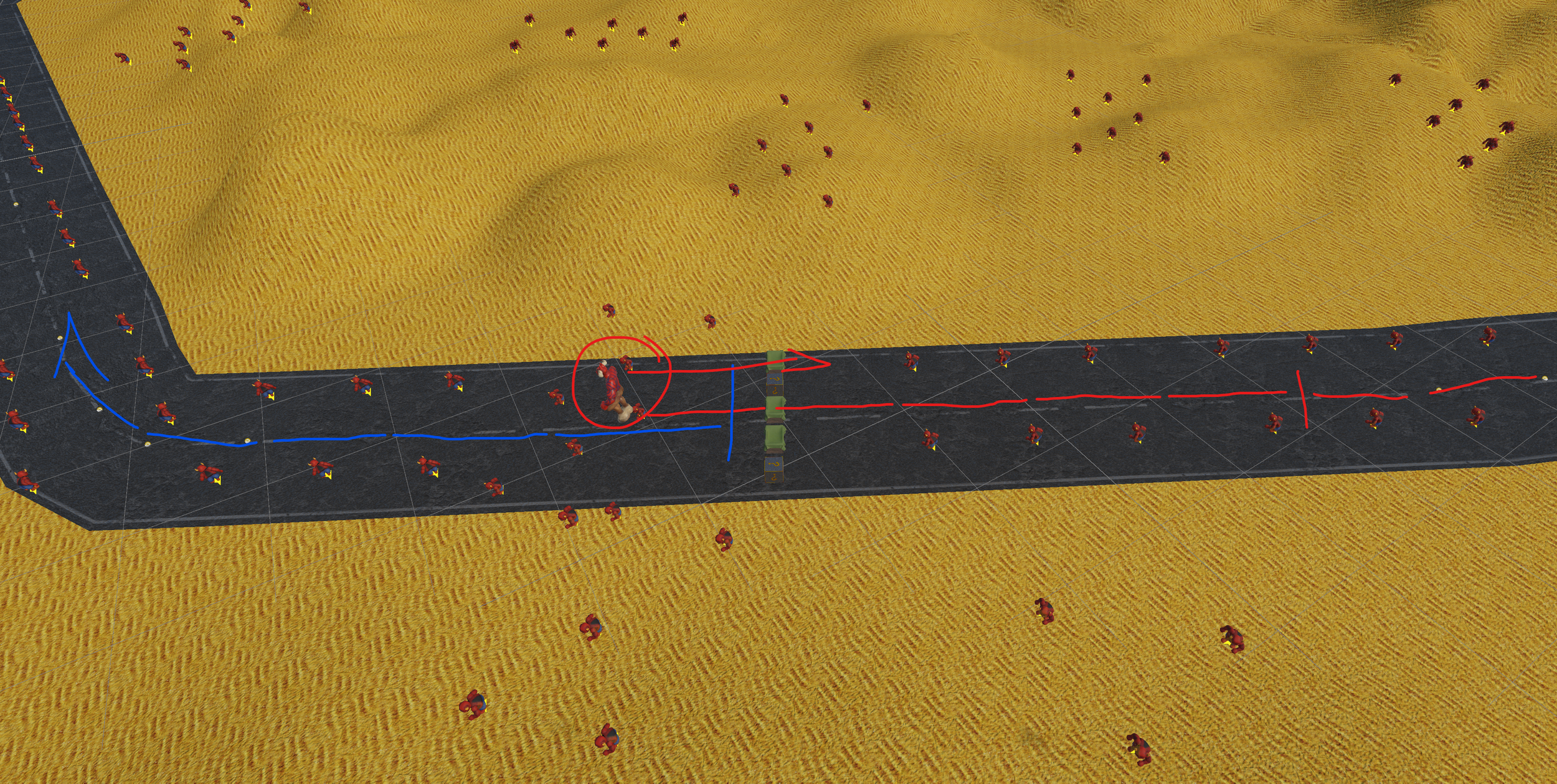
Action awareness economy assessment, everything in 50m chunks
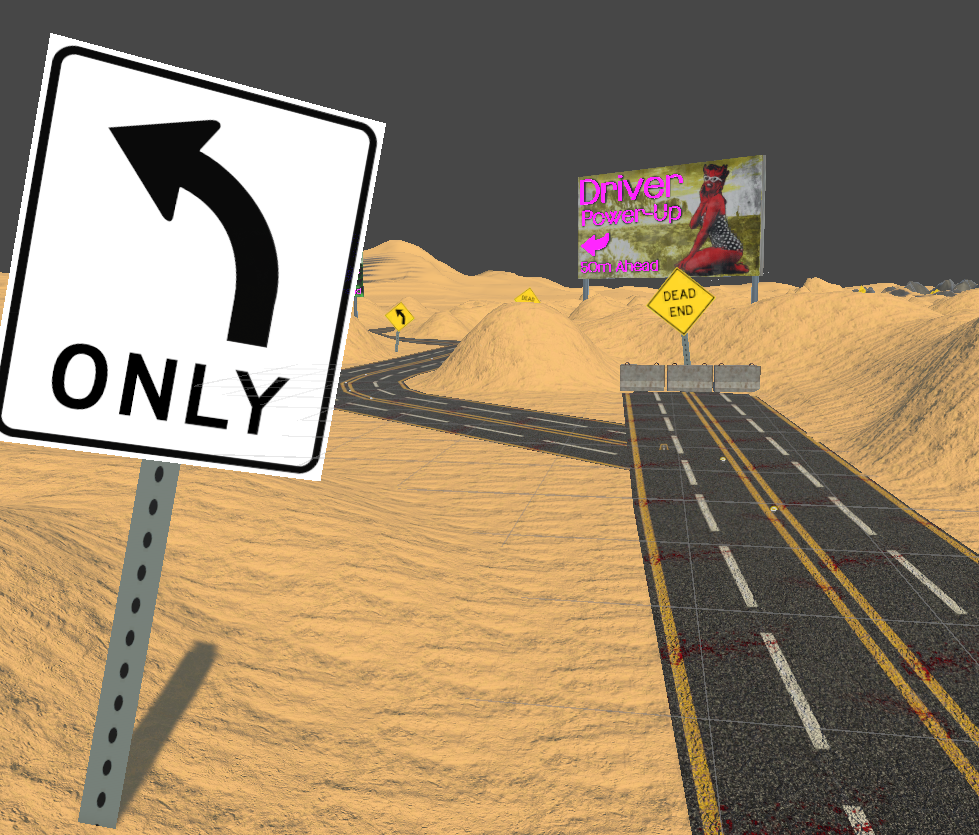
Road sign implementation
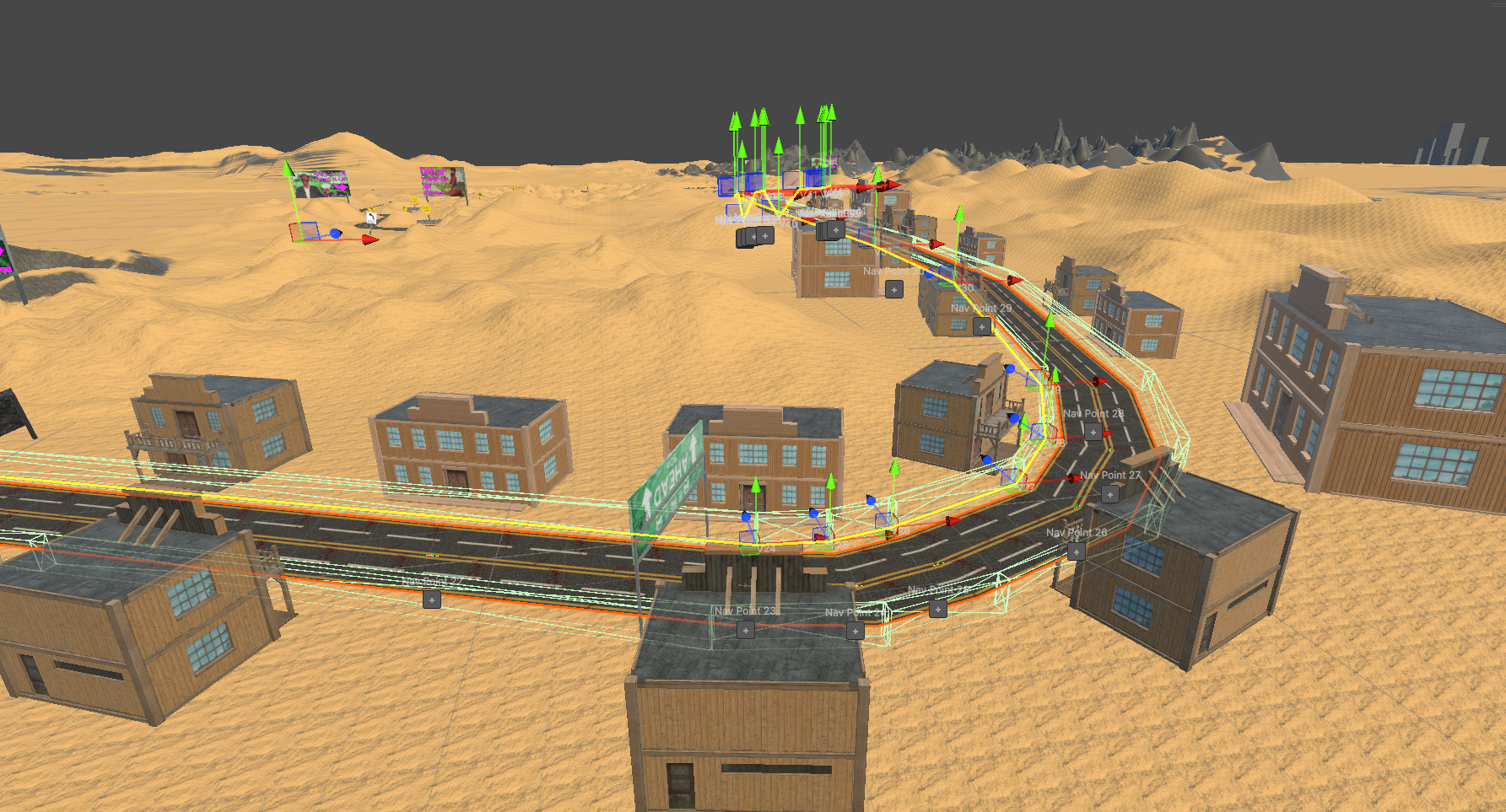
Ghost town final with invisible walls
What I learned
This was an amazing experience, and I learned so much as a designer throughout the process. The most important lesson by far was learning to fully embrace the iterative design process. Tearing down and rebuilding the level until it feels right is essential to strong design. Through constant feedback on pacing, enemy placement, obstacles, and power-ups, it was my responsibility to ensure everything flowed cohesively and supported the overall experience.
Another key takeaway was applying the Teach, Test, Challenge framework. Whether introducing new mechanics like jumps, enemies, power-ups, or even basic driving, players were given space to learn, practice, and then be challenged. Each gameplay beat was intentionally designed to support this structure while maintaining the intended pacing of the level.
I also developed strong technical skills in Unity, including terrain sculpting, slope tools, spline systems, and enemy culling. While these systems were initially challenging to learn, becoming comfortable with them significantly improved both development speed and the overall polish of the level.
A concept I focused on heavily during development was what I refer to as the “Action Awareness Economy.” This represents the time and distance required for players to recognize, engage with, and recover from a gameplay beat before transitioning to the next. For example, I structured encounters by giving players roughly 50 metres to see and recognize a beat, 50 metres to interact with it, and 50 metres to recover before the next event. This approach created a consistent rhythm that allowed players to react effectively while maintaining our core pillar of Fast-Paced & Hectic Co-Op gameplay.
Problem-solving was another major part of the experience, and is one of my favourite aspects of game design. A strong example of this involved our spline-based invisible wall system. While it worked well for guiding players, it didn’t support breaks for alternate routes. Rather than requiring additional engineering time, I implemented a simple workaround by lowering specific spline vertices beneath the terrain to create invisible gaps. This solution was quick, effective, and required no additional development resources.
Overall, this project significantly strengthened both my design thinking and technical ability. It pushed me to approach problems creatively, iterate with intention, and design with player experience at the forefront. As a result, I’ve become a more confident and capable designer, ready to take on more complex challenges in future projects.